Stephan Moore

sound artist / composer / curator — chicago

32 pieces, most recent first. Tap any title for more — text, video, or links to hear it.

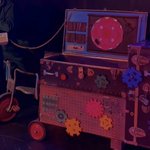
2026 Raft Sound design and environment work for Yanira Castro | a canary torsi's participatory installation, inspired by Géricault's The Raft of the Medusa.
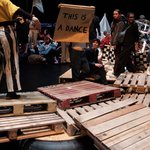
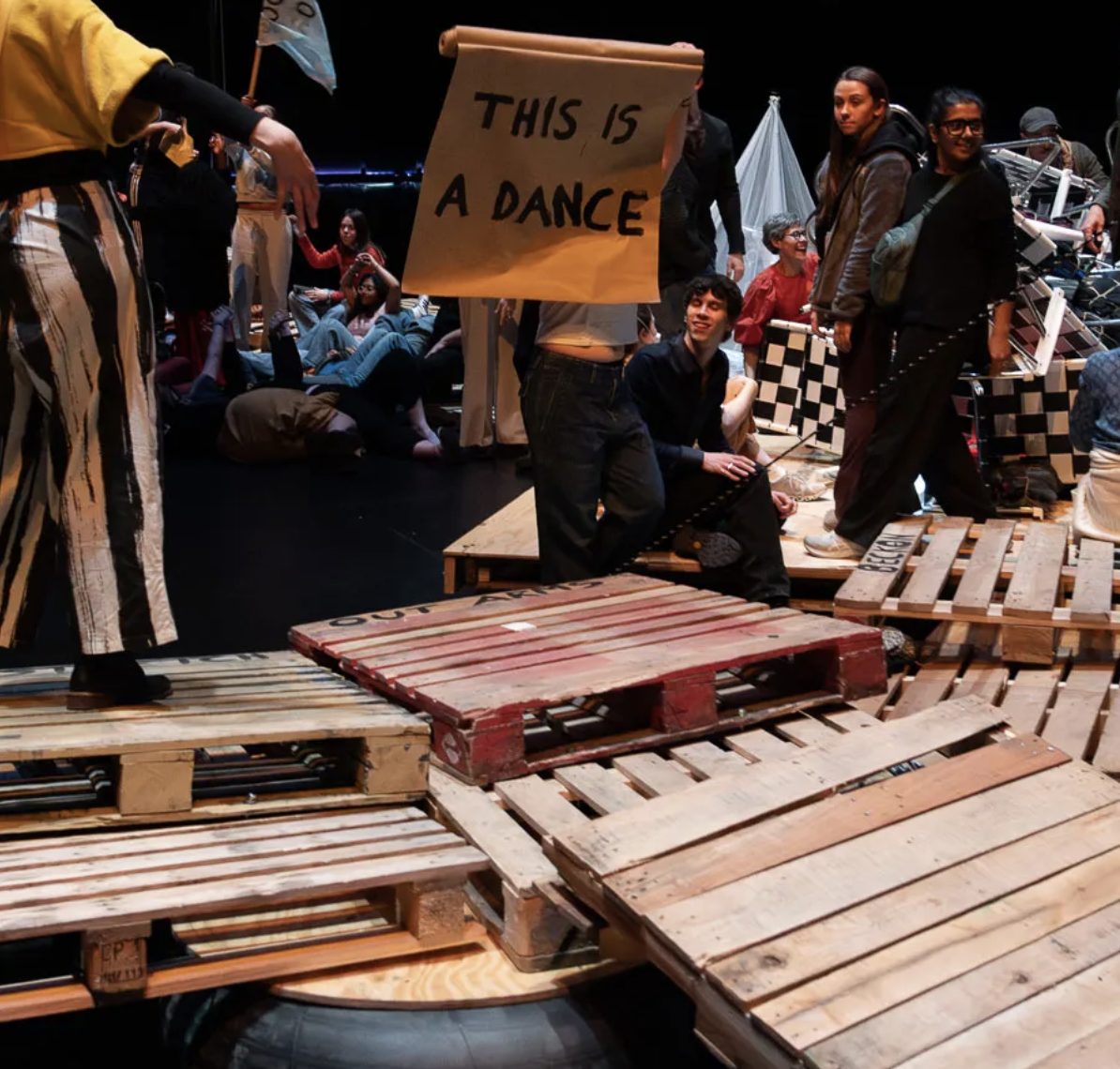
Raft is a participatory installation by Yanira Castro | a canary torsi, with sound design and environment work by Stephan, built from shipping pallets, bundled clothing, tarps, and emergency supplies and inspired by Théodore Géricault's 1818–19 painting The Raft of the Medusa. Created with an interdisciplinary design team including Kathy Couch, Ariel Lembeck, and LD DeArmon, with access dramaturgy by Marielys Burgos Meléndez. Premiered April 2026 as part of the Corpus Festival at EMPAC (Troy, NY), with the installation remaining on view into May.
Raft
EMPAC event page → a canary torsi →
2026 The Way In An Evidence album (with Scott Smallwood) and video game that lets players traverse its tracks through generative mazes.

The Way In, by Evidence (Stephan Moore + Scott Smallwood), is both an album and a video game that allows the album's tracks to be traversed and explored through a series of generative mazes. The music was recorded in the great reverberant space of the TANK Center for Sonic Arts in Rangely, CO. The game was produced in association with the Audio Games Lab at the University of Alberta in Edmonton, where it can be downloaded and played.

The TANK Center for Sonic Arts → Play it at the Audio Games Lab →
2026 In the Loop A Theater for the Very Young production inspired by Chicago's trains and buses, premiered at Northwestern.

In the Loop is a Theater for the Very Young production inspired by Chicago's trains and buses, devised by Ellie Levine and Jamal Howard in collaboration with Northwestern Theatre students in Theatre 330 and a class of 2–5 year-olds at Total Child Preschool. Stephan composed the music and sound design; objects and costumes are by Jillian Gryzlak, with lighting by Eric Southern. Suggested for ages 2–4. Premiered at Northwestern's Wirtz Center for the Performing Arts in June 2026.

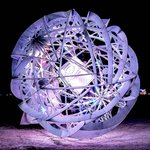
2018–2026 Unpopular Music An 8-channel outdoor listening environment built around a circle of Hemisphere speakers, closing out with a fifth and final Burning Man showing in 2026.

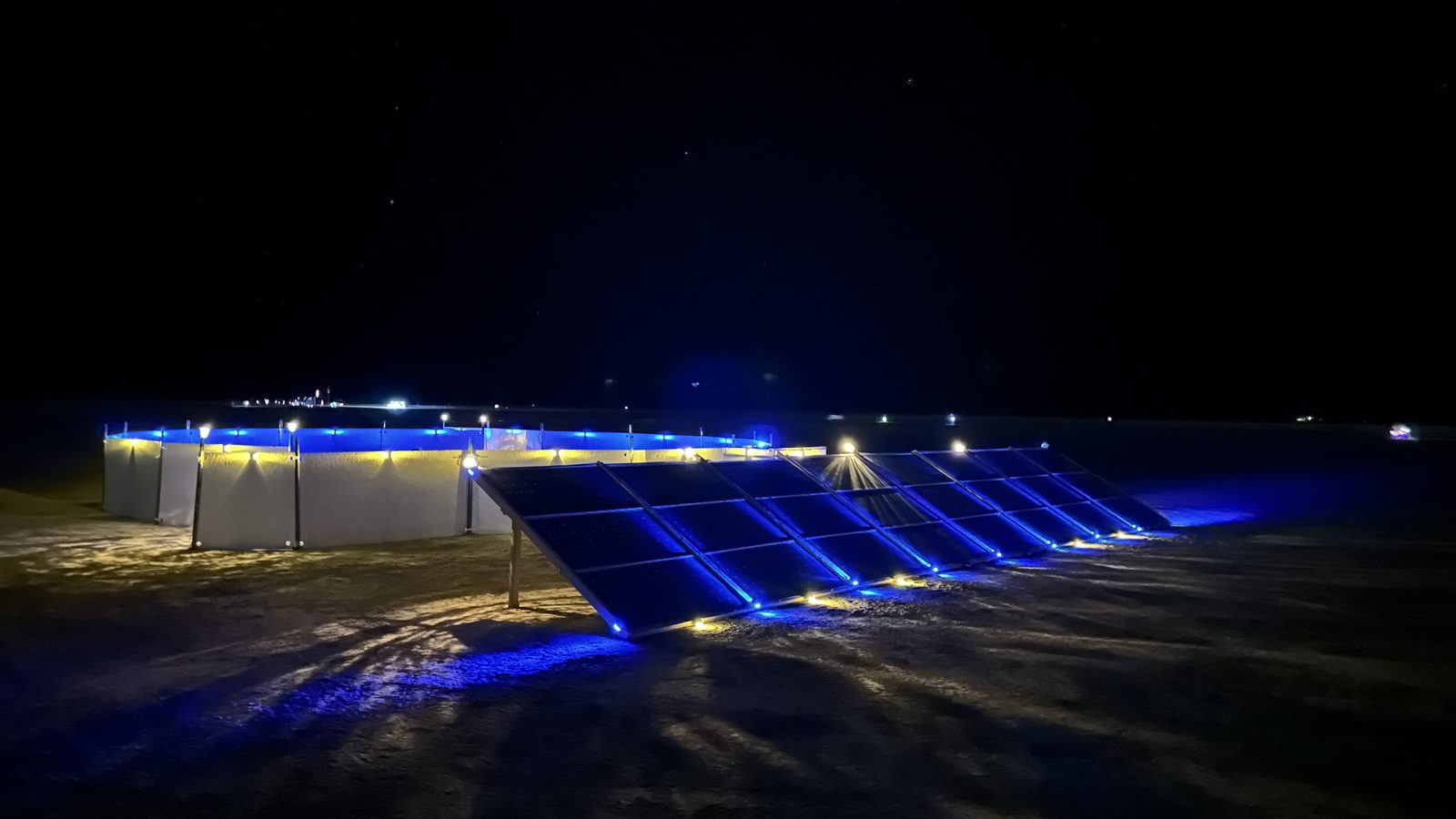
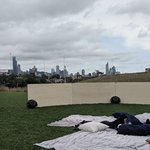
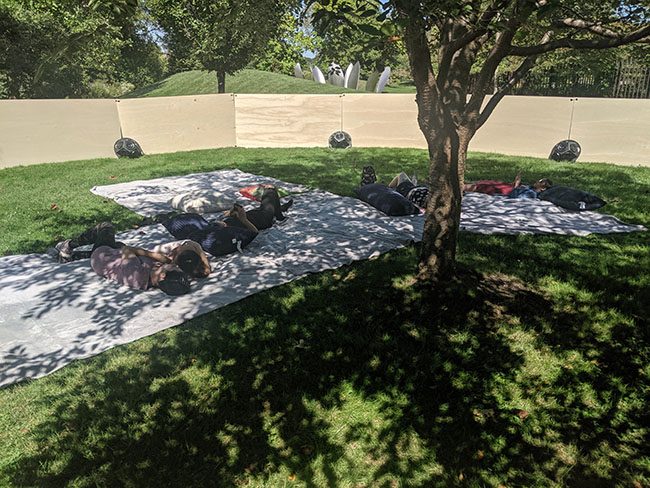
Unpopular Music is an intimate-yet-open-air, 8-channel listening environment. It features exquisite, detailed sound works — field recordings, abstract electroacoustic music, ambient textures, and other non-beat-oriented sonic experiences — composed by over 100 artists internationally. Encompassing a circular space 40 feet in diameter, the piece is built around a circle of small custom-built Hemisphere speakers enclosing a listening area with soft couches for seating. Shown in several iterations since 2018, mostly at Burning Man, but also in Chicago city parks. 2026 marks its fifth and final showing, at Burning Man.

Unpopular Music
Most recent (2024) iteration, playlist + virtual tour →
2025 Palace of Machinery An immersive audio/video installation with Jenny Boles, reanimating early 20th-century industrial film in an eight-channel sound environment.

Palace of Machinery is an immersive audio/video installation created in collaboration with Jenny Boles. It is a haunting multi-screen reanimation of early 20th-century industrial films originally shot in collaboration with Pittsburgh's Westinghouse factories and exhibited at the 1904 St. Louis World's Fair. Four floor-to-ceiling images span a single wall while eight channels of sound fold the room into a living echo chamber. Visions of technological “progress” and spectacles of orchestrated factory labor return as disorienting afterimages of the imbricated world-making processes and agendas of our film and extractive industries. Exhibited at the 2025 Chicago Underground Film Festival.

2025 Splish Splash: A Day on the Lake A musical Theater for the Very Young adventure across Lake Michigan, later remounted at the Goodman Theatre.

Splish Splash: A Day on the Lake invites its youngest audiences (ages 0–5) aboard a musical adventure across Lake Michigan: when the moon tumbles into the lake and breaks apart, a crew of young sailors helps the Great Blue Heron and friends — Crayfish, Beaver, Turtle, and Yellow Perch — put it back together through songs, puppetry, and hands-on play. Created and directed by Jamal Howard and Ellie Levine in collaboration with Northwestern's Imagine U, undergraduate students, and 2–5 year-olds from Total Child Preschool, with sound design by Stephan. Premiered at Northwestern in 2025, then remounted for an extended run at the Goodman Theatre's Alice Center in early 2026.

2024 Imagine That! A Theater for the Very Young production about the four seasons, made for audiences ages 0–5.

Imagine That! is a Theater for the Very Young production for the very youngest audiences (ages 0–5), built around the changing seasons and the empathy and imagination it takes to move through them together. Created and directed by Ellie Levine (with Jamal Howard co-directing on later remounts), developed in collaboration with Northwestern undergraduates and 2–5 year-olds at Total Child Preschool, with sound design by Stephan. Premiered at Northwestern in 2024, with additional showings since, including a 2026 remount alongside Splish Splash.

2024 Meridian Transmission Ambisonic sound design for Eric Patrick's 360° film, shown at festivals and available in VR.

Meridian Transmission is a short, mysterious 360° film by Eric Patrick with both live action and animated elements, with ambisonic sound design by Stephan. The film has shown at numerous film festivals and received several awards. Watchable in-browser (click and drag around the 360° scene) or, best of all, in VR goggles.

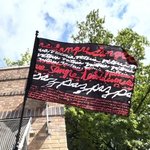
2023 i came here to weep Live and interactive sound design for a canary torsi's participatory installation on U.S. territorial possession.

i came here to weep is a multimodal, iterative project enacted by the public, created by a canary torsi, with live and interactive sound design by Stephan. It is an environmental installation made up of participatory scores with corresponding materials and environments that examine U.S. territorial possession through the redaction, deconstruction, and performance of absurdist colonial texts.

a canary torsi's page for the piece → Descriptive PDF →
2014–2023 Sisyphus 2.0 An interactive sound sculpture — the same steel sphere from Glory Road, given its own life as a musical puzzle, twice over.

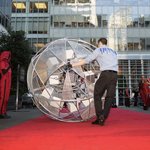
Sisyphus 2.0 is an interactive sound installation — sculpture by Melanie S. Armer, composition and programming by Stephan — that invites questions about technology, artistic authorship, and physical toil. The 6½-foot steel sphere, originally built as the set piece for The Nerve Tank's Glory Road, took on its own life as a standalone musical puzzle once that production ended, touring festivals including Sonic Delights, Playa del Fuego, and Figment Philadelphia through 2015. Internal accelerometers read the sphere's position as it's rolled along the ground and trigger different sound files in response, rewarding sustained interaction until a person can learn to “play” it like an instrument. A second sphere was built a few years later and has since been shown in a number of additional venues.

Nerve Tank: Sisyphus 2.0 →
2022 My Data Body Sound design (with Scott Smallwood) for Marilene Oliver's VR piece assembling medical, biometric, and social data into a manipulable body.

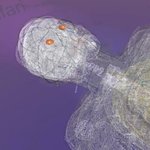
My Data Body is a VR artwork created by Marilene Oliver, with sound design by Stephan and Scott Smallwood, and poetic texts by J.R. Carpenter. The project brings together different forms of personal data — medical scans, social media, biometric, banking, and health data — in an attempt to make visible and manipulable our many intersecting data corpuses, so that in VR they can be held, inspected, and dissected. The sound design allows the player to turn the body into a spatial composition, assigning an array of sounds to the various body parts as they are dislocated.

More on the project →
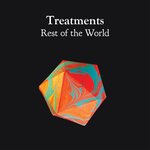
2022 Rest of the World The debut album by Treatments, Stephan's long-running duo with Michael Dauphinais, recorded live over Zoom during the pandemic.

Rest of the World is the debut album by Treatments — Michael Dauphinais (piano, concertina, melodica, percussion, voice) and Stephan Moore (live audio processing matrix), musical collaborators for nearly 30 years. The four tracks were recorded as live performances over Zoom, with no overdubs or post-processing and only light edits, during a series of weekly Wednesday-morning sessions in March, April, and May of 2021. Released March 25, 2022.

2021 VastWaste Interactive sound design for Ozge Samanci's data-driven installation on marine plastic and orbital debris.

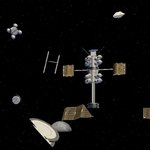
VastWaste is a data-driven, projection art and virtual reality installation by Ozge Samanci, with interactive sound design by Stephan. The piece illuminates the parallels and interplay between marine pollution and space debris, using static and live data such as the speed of ocean plastics and the human use of satellites. It has shown at festivals and media arts spaces globally.

2019 HearRing An offshoot of Unpopular Music — the same 8-channel listening space, deployed guerrilla-style in Chicago parks with an all-local composer lineup.

HearRing is an offshoot of the Unpopular Music project: the same outdoor 8-channel music listening space, made for guerrilla-style deployment in city parks rather than the desert. The first HearRing appearances took place September 14, 15, and 21, 2019, at Jackson Park, Palmisano Park, and Pottawattomie Park in Chicago, each running a full afternoon program of 8-channel compositions by Chicago-based composers and sound-makers, including Nicolas Collins, Olivia Block, Katherine Young, Sam Pluta, and Evidence, alongside several works by Stephan himself. The system was organized and executed by Stephan, with the music program assembled by Jonesy Jones; funded through the Chicago Park District's Night Out in the Parks program, with application and marketing support from Experimental Sound Studio.

HearRing
Full program & details →
2019 Last Audience A modular, evening-length performance by a canary torsi in which the audience becomes the central performers. Bessie Award honoree.

Last Audience is a modular/mutable evening-length performance work by a canary torsi, which premiered at New York Live Arts in October 2019. It was an honoree of the Bessie Awards for Outstanding Production and Outstanding Original Sound Design/Composition. In each incarnation of the work, the audience becomes the central performers. It was later transformed into a performance manual and an accompanying website, allowing the piece to continue to “tour” during the pandemic.

Performance manual / website →
2019 Six Accompaniments for Solo Voice A sound installation for six speaker-outfitted benches at the University of Chicago's Chicago Sound Show.

Six Accompaniments for Solo Voice is a sound installation commissioned for The Chicago Sound Show at the University of Chicago in Fall 2019. In the University's Snell-Hitchcock Quadrangle, six benches are outfitted with speakers, each providing a different accompaniment for the ceaseless vocalization of the nearby Searle Chemistry Laboratory's ventilation system.

Full show info + digital catalog →
2019 Go Where Light Is The sixth Evidence album, built from field recordings and improvisations made in Colombia.

Go Where Light Is is the sixth full-length album by Evidence (Stephan Moore + Scott Smallwood), built from field recordings and improvisations made in and around Manizales, Colombia in May 2016. Elements from the album first appeared in the sound installation “Meridional Transitive” as part of Balance-Unbalance 2016. The record was mixed and assembled at the Centre for Sound Communities at Cape Breton University in the summer of 2017, and released in April 2019.

2018 Jugaad Field recordings made while teaching in Doha, Qatar and traveling in Cairo, for Cabin Fever's year-long artist series.

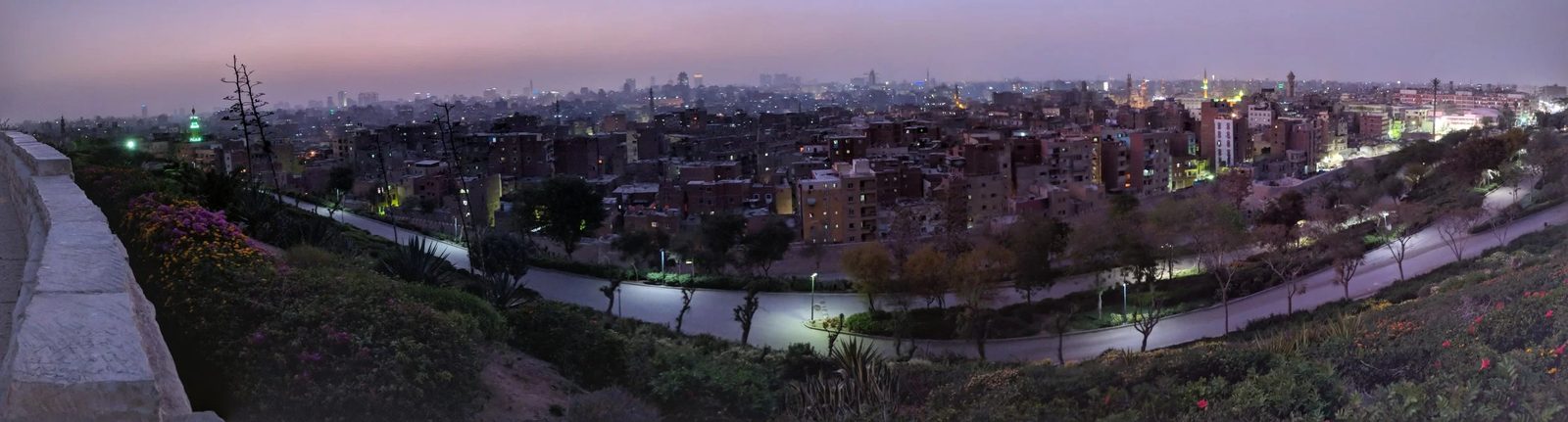
Jugaad is a set of field recordings made during a brief stint teaching in Doha, Qatar in 2018. The recordings were made in Doha and in Cairo, Egypt, and reflect the character of each city as experienced at the time. Collected for “Cabin Fever Presents,” a year-long series of artist projects sponsored by the Cabin Fever Collective. A separate field recording from the same period was featured on the Touch Radio blog.

Jugaad
Recordings, text & images → Touch Radio feature →
2017 A Grid Against The Sky Evolving cross-hatched sound patterns filling the Fern Room at Chicago's Lincoln Park Conservatory.

A Grid Against The Sky aims to fill the interior volume of the Fern Room at Chicago's Lincoln Park Conservatory, organizing the air molecules into evolving cross-hatched patterns. These patterns are determined by the complex harmonics of a set of conjoined metal instruments called the Wall of Metals; pre-recorded performances of the Wall are slowed down, reversed, and otherwise mixed and manipulated in real time. Commissioned by Chicago's Experimental Sound Studio for its installation series Florasonic; exhibited December 10, 2017 – March 5, 2018. This recording was made during public hours and contains the ambient sounds of the room along with its visitors.

0:00
2017 Calling Up A site-specific installation of layered voice fragments for the sanctuary at Manhattan's Church of the Ascension.

Calling Up is a site-specific sound installation created for the sanctuary at the Church of the Ascension in Manhattan. Broadcast from hidden speakers, shifting vapors of sound swell and dissolve — cloud-like textures made up of tiny fragments of voices, expanded through layering and repetition, in a process that never repeats and is always gradually evolving. The vocal sounds are drawn from recordings by the vocal ensemble Voices of Ascension, singing antiphon chants by 11th-century poet, abbess, and composer Hildegard von Bingen. Created for the New York Electronic Arts Festival, shown May 26 – July 14, 2017. This recording was made with an ambisonic microphone and decoded to binaural — best on headphones.

0:00
2017 Toowoomba Looproom: Music of Transmission Damage An audio signal repeatedly transmitted between the USA and Australia, mangled by consumer video-chat software along the way.

Toowoomba Looproom consists of an audio signal repeatedly transmitted back and forth between the USA and Australia. Along the way the sound is compressed, glitched, and otherwise mangled by consumer-grade communication software; when the signal is completely blotted out, fresh audio is generated to replace it — a piece about how the systems we trust to transmit information can recompose and transform the messages they carry. Created for a solo exhibition in Toowoomba, Queensland, Australia, running throughout April 2017. Played on two speakers stacked vertically: the top channel represents the Australian signal, the bottom the US signal.

0:00
2016 Chorus for Untrained Operator A collaboration with Peter Bussigel: discarded household objects rewired into an ensemble, controlled via a 1940s switchboard.

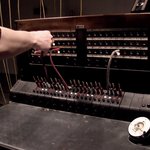
Chorus for Untrained Operator is a collaboration between Peter Bussigel and Stephan Moore. The piece is comprised of a collection of discarded quotidian objects, each relieved of its original responsibilities, rewired, and transformed to emphasize its musical voice. The ensemble is controlled through the patchbay of a 1940s Western Electric switchboard. Created with support from Brown University at the Granoff Center for the Creative Arts, 2015–16, where it premiered in March 2016.

2016 Performance|Portrait A canary torsi's Kinect-driven durational video piece, responding only to an observer's unconscious movements.

Performance|Portrait is a creation of the performance collective a canary torsi. This silent installation uses a Microsoft Kinect2 sensor to detect the presence of an interactant, then manipulates one of four durational video performances (each four hours long) in response to observations it makes about the interactant's subtle, unconscious movements — overt gestures are ignored. The piece raises questions about intimacy, attention, and the limits of interactive art. Debuted December 3, 2016, after being workshopped in a number of residencies, and was shown at The Invisible Dog, a gallery in Brooklyn, that winter.

a canary torsi: details →
2011–2016 Losperus A performance scenario amplifying spontaneously built kinetic sculptures made from thrift-store objects, performed worldwide.

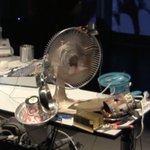
Losperus is a performance scenario by Evidence, with live video (when possible) by Jonathan Lee Marcus. Using small, durable microphones, Stephan and Scott Smallwood pick up and amplify the sounds produced by spontaneously constructed kinetic sculptures built from typical household appliances and resonant objects — collected, as a rule, from thrift stores in the same city as the performance. The piece has been performed around the world, most recently at NIME 2016 in Brisbane; the video here was recorded in Providence, RI on April 29, 2012.

Hong Kong Arts Center performance (2012) → Edmonton, Alberta performance (2011) →
2014 Diacousticon Eight robotic slide-whistle-and-music-box instruments, listening and responding around a garden fountain.

Diacousticon consists of a chorus of eight robotic instruments equipped with slide whistles and music boxes, listening to their environment and responding to it spontaneously. The instruments, whose ambiguous appearance may suggest weaponry or surveillance devices, are mounted around the structure of a dovecote atop a fountain surrounded by a garden. Exhibited as part of In the Garden of Sonic Delights, an exhibition of sound art curated by Stephan across six venues in New York's Westchester County, June 7 – November 2, 2014. Documentation below by filmmaker Caryn Waechter.

Exhibition website → Online catalog →
2014 In Summary, A generative Max patch composes a six-minute piano piece from the previous hour's ambient sound, sight-read live.

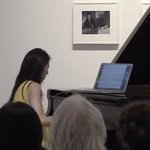
In Summary, is a piece for solo piano and laptop computer (the comma is part of the title). A Max patch listens to its surroundings continuously for a minimum of one hour; then, when activated, it generates a six-minute composition that recapitulates the previous hour's sounds at 10x speed, compressing pitches and rhythms into an impromptu reduction. The notation is generated spontaneously and displayed for the pianist to sight-read — it is not saved, and each iteration of the score is lost upon completion. Pianist Jenny Lin has performed the piece as a concert-closer or encore on a number of occasions. Documented here at the 2014 Look and Listen festival in NYC.

2013 Glory Road An outdoor interactive theater production built around a 6½-foot steel sphere, with sound design and programming by Stephan.

Glory Road is a multidisciplinary performance project with integrated media and visual art components, written, directed, and created by the theater collective The Nerve Tank. Inspired by the myth of Sisyphus, the piece features a 6½-foot steel sphere that acts as a giant sound puzzle — the performer's task is to solve and re-solve it in a seemingly endless loop, interrupted by song. Stephan served as digital interface designer (with Mikhail Mansion) and sound designer/composer. Presented by Arts Brookfield in 2013.

Nerve Tank: Glory Road →
2013 Visuals An Evidence album and 8.1-channel sound installation — three long-form meditations on color, texture, place, and light.

Visuals is a 2013 album and 8.1-channel sound installation by Evidence (Stephan Moore + Scott Smallwood), three long-form meditations on color, texture, place, and light, released by the label Contour Editions as a free download. The installation premiered at Studio 10 Gallery in Brooklyn from July 31 to August 17, 2013; some of the material began as a performance curated by Pauline Oliveros at the Stone in August 2012.

Daniel Neumann interview, Contour Editions →
2012 Heather O / The People To Come A dance video with a canary torsi that grew into a four-hour, audience-authored performance touring through 2013.

Heather O is a dance video by a canary torsi, choreographed by longtime collaborator Yanira Castro, with a score composed by Stephan using a generative process in Max that borrows the structure of the dance — shot and edited with dancer Kimberly Young during a 2012 residency at Amherst College. Both the choreography and musical process were exploded into a four-hour dance piece with live musicians and an interactive website, The People To Come, performed over 20 times across 5 venues in 2012–13. The website collected an archive of over 1000 submitted audience suggestions and hundreds of realizations of the musical score by over 50 musicians, all used to build new iterations of the dance. The aftermath toured to the Performance Archiving Performance show at the New Museum, with a concert there in December 2013.

The People To Come (archive) → Online score player → Performance Archiving Performance, New Museum →
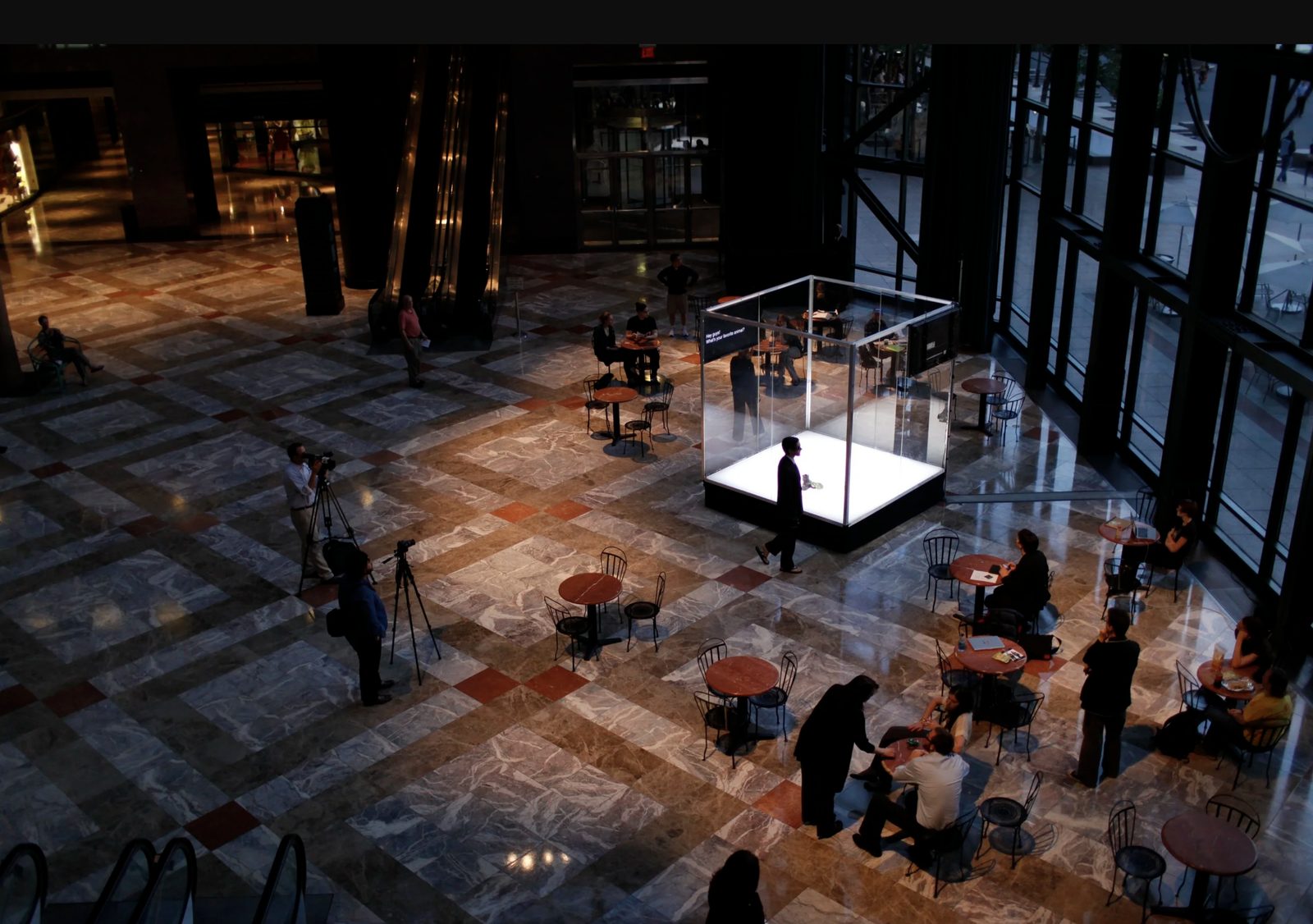
2011 The Attendants An eight-foot transparent cube installation/performance where passersby text messages to two silent performers inside.

The Attendants is part installation and part interactive multimedia performance, created by the theater collective The Nerve Tank. The dominant set piece is an eight-foot, transparent plexiglass cube; two silent performers dressed in black suits move inside it while a recording of a conversation about making theater plays. Passersby can communicate with the performers by texting them, with messages appearing on two flanking screens. Stephan composed the sound design. The performance is durational, allowing viewers to come and go as they please. Commissioned by Arts Brookfield.

The Attendants
Nerve Tank: The Attendants →
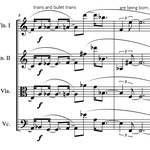
2010 To Go To Lvov A string-quartet transcription of pitches and rhythms extracted algorithmically from a spoken poem.

To Go To Lvov was composed for the Providence String Quartet. The score is a transcription of pitches and rhythms extracted from a recording of Stephan's voice reading the poem “To Go To Lvov” by Polish poet Adam Zagajewski, translated by Renata Gorczynski. The transcription algorithm was coded in Max. The piece reflects on the idea and the actuality of one's hometown, in terms that are sentimental, existential, and mystical — sometimes all three at once. Premiered December 13, 2010.

0:00
View the score (PDF) →
2009 Moving Target A piano-and-electronics piece where fluctuations in the performer's tempo shift a bank of evenly-spaced delays.

Moving Target is a piece for piano, computer, and six speakers. The pianist plays a series of quarter notes into a bank of evenly-spaced delays; fluctuations in the performer's tempo result in shifting rhythmic patterns, and occasionally the delays are also in motion. Commissioned by pianist Michael Dauphinais in 2009; performed here by Barbara Lieurance at the 2014 Gilmore International Piano Festival.

0:00